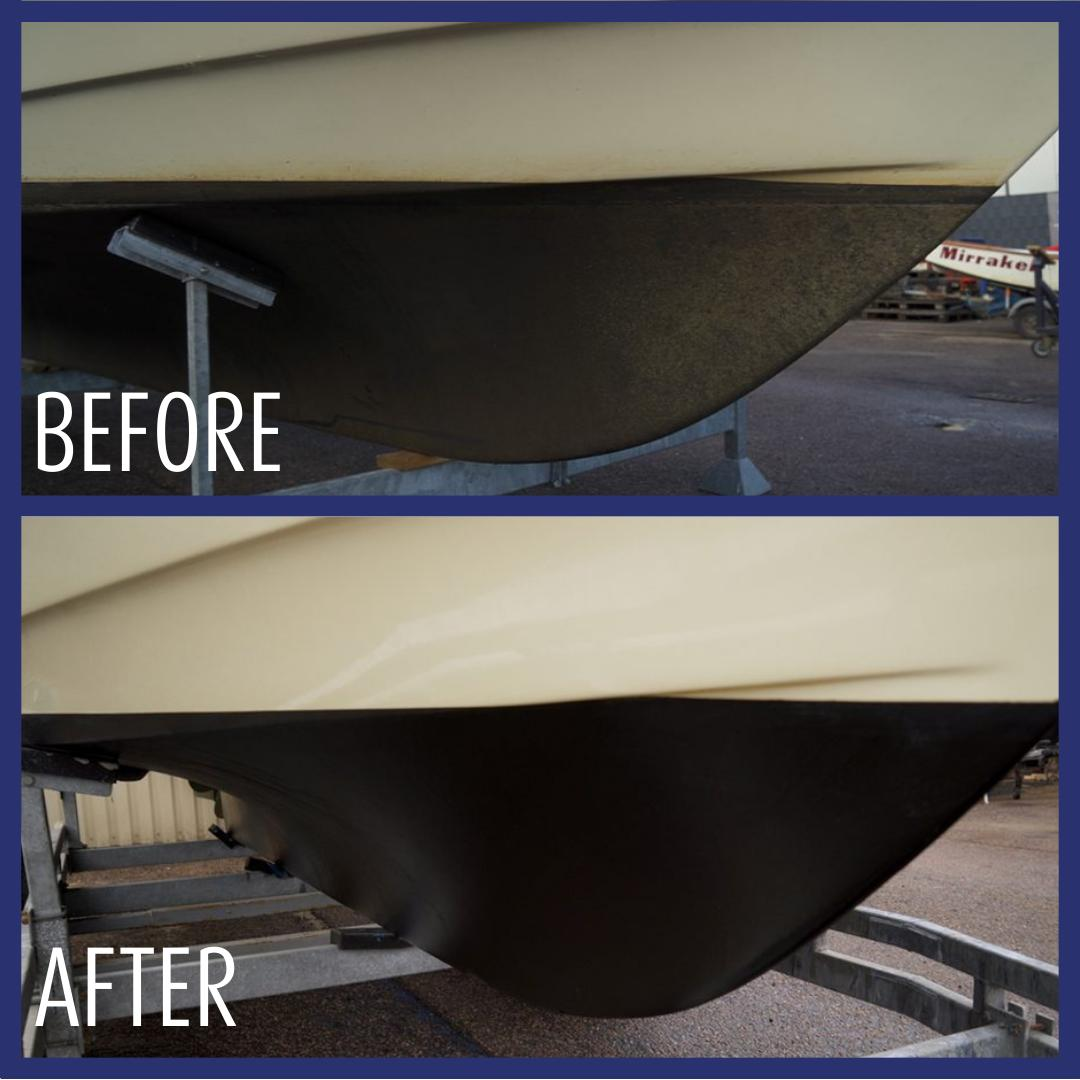
Boats live in one of the harshest environments imaginable. Constant UV exposure, water, minerals, salt, pollution, and improper maintenance slowly attack the gelcoat, causing oxidation, fading, chalkiness, water stains, and a loss of gloss. Unlike automotive paint, gelcoat is thicker, more porous, and requires an entirely different restoration process.
Many people believe a faded boat simply needs wax. In reality, wax cannot restore damaged gelcoat—it can only temporarily improve its appearance.
What Is Oxidation?
Oxidation occurs when years of ultraviolet light and environmental exposure break down the outer layer of gelcoat. As oxidation progresses, the surface becomes dull, chalky, rough, and loses its ability to reflect light. Left untreated, the damage continues to worsen until restoration becomes more difficult and, in severe cases, impossible without refinishing.
The sooner oxidation is addressed, the better the results and the lower the restoration cost.
Every Boat Is Different
No two boats oxidize the same way. Age, storage conditions, climate, hours on the water, maintenance history, and even the color of the gelcoat all affect how much restoration is possible.
A boat that has been covered or stored indoors may require only light polishing. A boat left uncovered in the sun for years may require multiple stages of compounding, polishing, or even wet sanding to safely restore its finish.
There is no one-size-fits-all process.
Restoration Is About Preserving Gelcoat
Professional restoration isn't about using the most aggressive compound possible. It's about removing only the amount of oxidation necessary while preserving as much healthy gelcoat as possible. Every boat is evaluated individually to determine the least aggressive process that will produce the best result.
Sometimes that means a light polish. Sometimes it requires wet sanding. The process should always match the condition of the boat—not the other way around.
What Detailing Can Restore
Professional restoration can often dramatically improve:
- Heavy or light oxidation
- Chalky, dull gelcoat surfaces
- Loss of gloss & reflection
- Water stains & scum lines
- Light surface scratches & scuffs
- Dock scuffs & surface staining
- Faded or discolored appearance
What Requires Repair
Some damage requires fiberglass repair or refinishing rather than detailing:
- Cracked or spider-webbed gelcoat
- Deep gouges & hull chips
- Structural fiberglass damage
- Missing or flaked gelcoat
- Severe impact damage
- Areas where gelcoat has completely worn through
Honest expectations are part of professional restoration. We'll always explain what can be restored, what can be improved, and what requires structural repair.
Protecting Your Investment
Once a boat has been restored, protecting the finish is just as important as restoring it. Routine washing, proper maintenance, and professional-grade marine ceramic coatings help slow future oxidation, make cleaning easier, reduce water staining, and keep the boat looking its best for much longer.
Our Philosophy: Every boat tells the story of how it has been cared for.